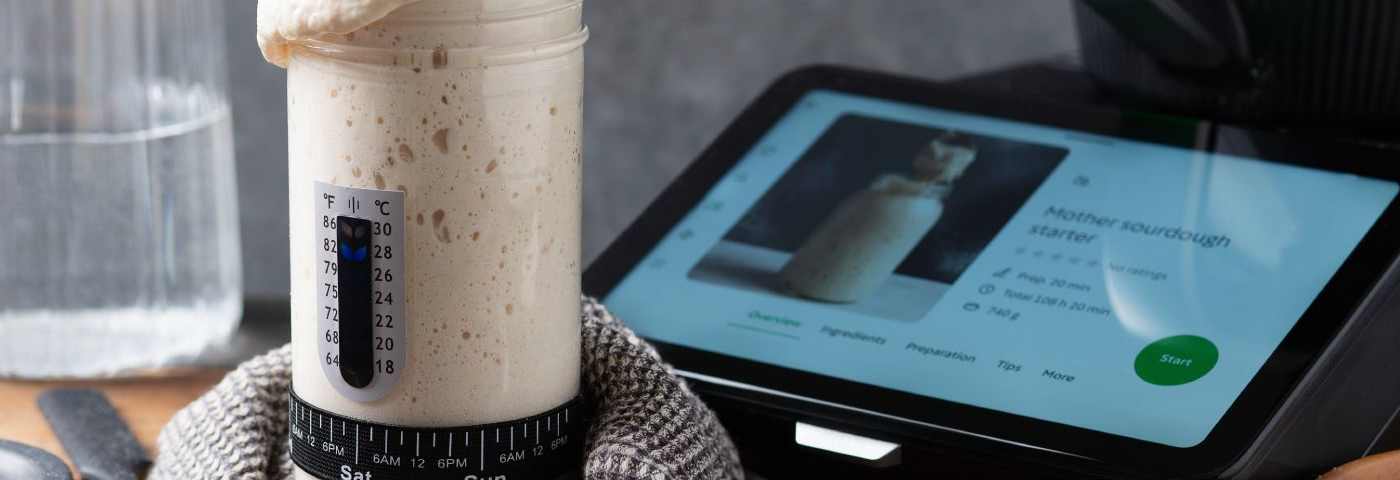
Sourdough isn’t complicated — it’s a small, living ecosystem that rests quietly on your countertop. If you care for it patiently — keeping it clean, warm, and regularly fed — it will reward you in its own time. In return, you’ll enjoy bread for years, even decades, with deeper flavor, easier digestion, and freshness that lasts well beyond baking day.
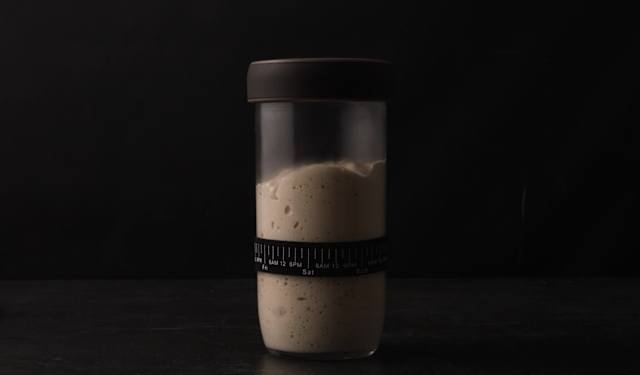
“An old friend by many names” — that’s how sourdough is often described. It doesn’t bark or purr, but it is very much alive. Fed regularly and kept warm, it gives something back in return: a quiet kind of patience, carrying notes of apple and grain. Those tiny bubbles? They’re the promise of a good day ahead.
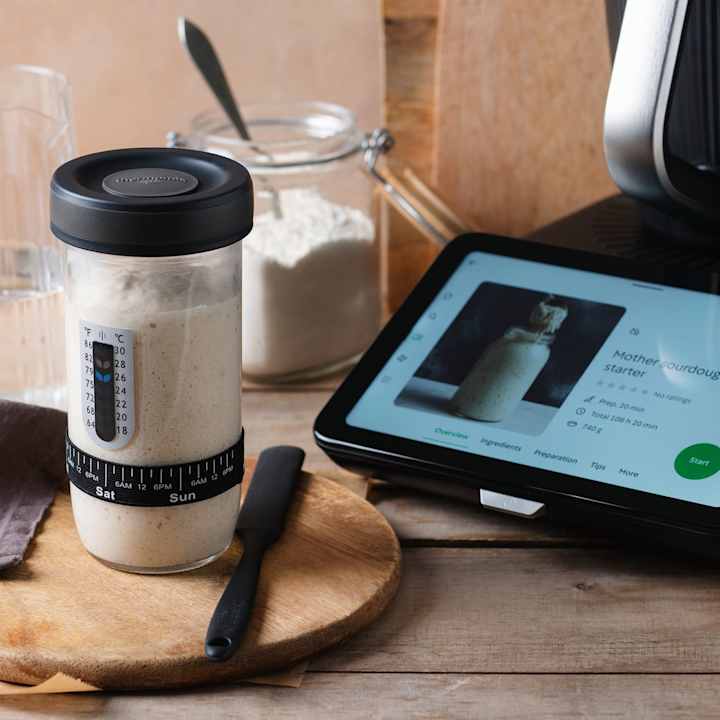
Set out clean jars with loose-fitting lids and find a warm spot. Nothing too active — just a calm, steady mixture that slowly learns to breathe. A starter isn’t something to rush; it’s something to nurture. And once you’ve watched it rise and settle, like a gentle tide, it’s hard to imagine baking without it.
Inside that jar, a quiet little world is at work: lactic acid bacteria and acetic acid bacteria living alongside wild yeast. Feeding on flour and water, they move at their own pace, creating gentle acids, a little alcohol, and carbon dioxide — the breath that lifts the dough.
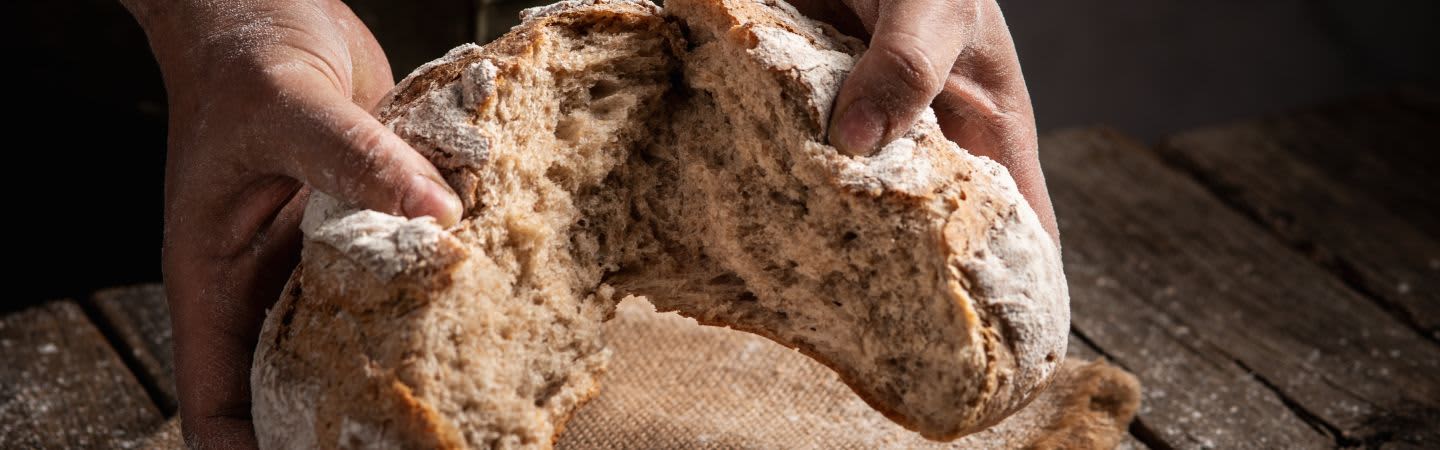
Keep them somewhere between 75 and 82°F and they’ll stay happily active. A little warmer and the flavor leans softer and rounder; a little cooler and it becomes sharper, with more edge. You’ll taste the difference in the loaf: a moist, well-structured crumb with a fine honeycomb interior, and a crust that bakes to a deep color, stays crisp, and carries its aroma quietly through the room.
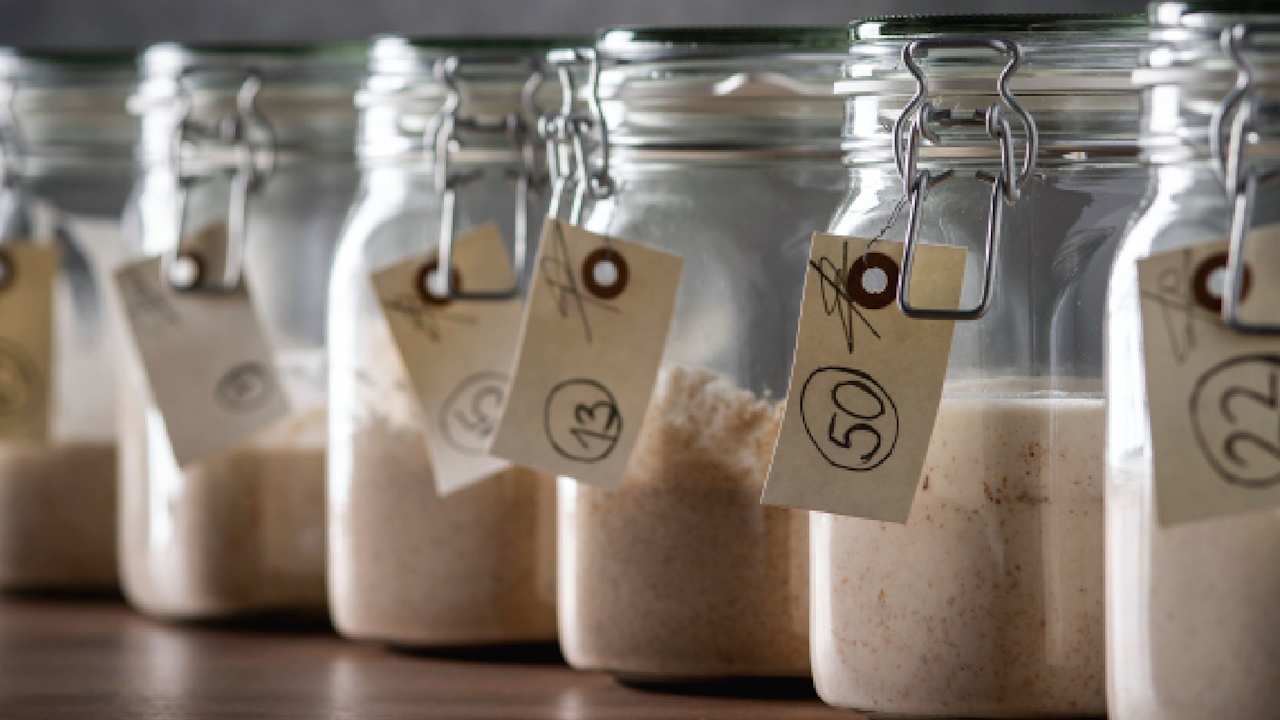
Wheat starters — and sometimes apple-and-wheat starters — tend to prefer a slightly quicker cycle, usually every 3 to 4 days, using the same 10:50:60 ratio. Feed with wheat flour and let it ferment gently at 72 to 79°F before returning it to the refrigerator to rest.
If you decide to change direction, it’s easy to turn one starter into another. It’s less a hard switch than a gradual conversation. To shift rye starter toward wheat, mix 0.5 oz ripe starter, 2 oz wheat flour and 2 oz water. Let it rest for 12 hours, then feed it again with another 2 oz water and 2 oz wheat flour. Leave it to rest for another 12 hours, then repeat once more. By then, you've taught it to love wheat. The reverse journey, from wheat to rye, works the same way.
Mini-FAQ
“Why does my starter smell like vinegar?” → It may have become too acidic or stayed too cool. Try refreshing it more often and keeping it warmer, ideally between 75 and 82°F.
“Can I revive a sluggish starter?” → Yes. Feed it at a warm temperature with fresh flour and water and repeat for 1 to 2 feeding cycles if needed.
“Shall I use a tight or loose lid?” → Keep it covered, but don’t seal it airtight during active fermentation.
Warning signs
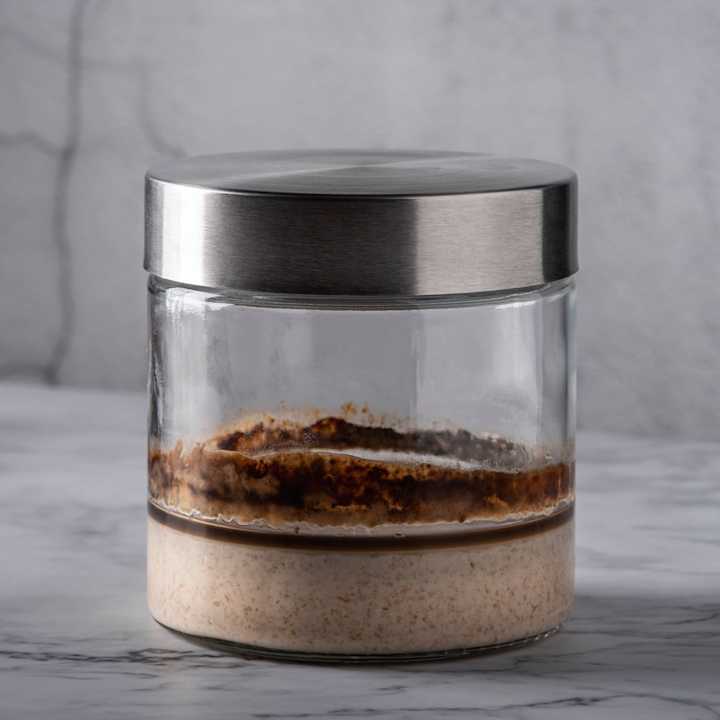
• Unusual colors (red, blue, black, green) or any visible mold → discard immediately and start over.
• Strong vinegar smell usually signals excess acidity or a starter that has been kept too cool. Refresh it and move it to a warmer spot.
Everyday ways to keep it warm
• Choose a naturally warm place in the house, like the kitchen, or near — but never directly on — a radiator, with an insulating surface underneath.
• The oven-light method can also help: briefly warm the oven with the light on, then switch it off before placing the starter inside. Take care to avoid overheating.
• Precise heating: Heat water to 95-100°F for starter builds and use cooler water for main doughs to help manage final dough temperature.
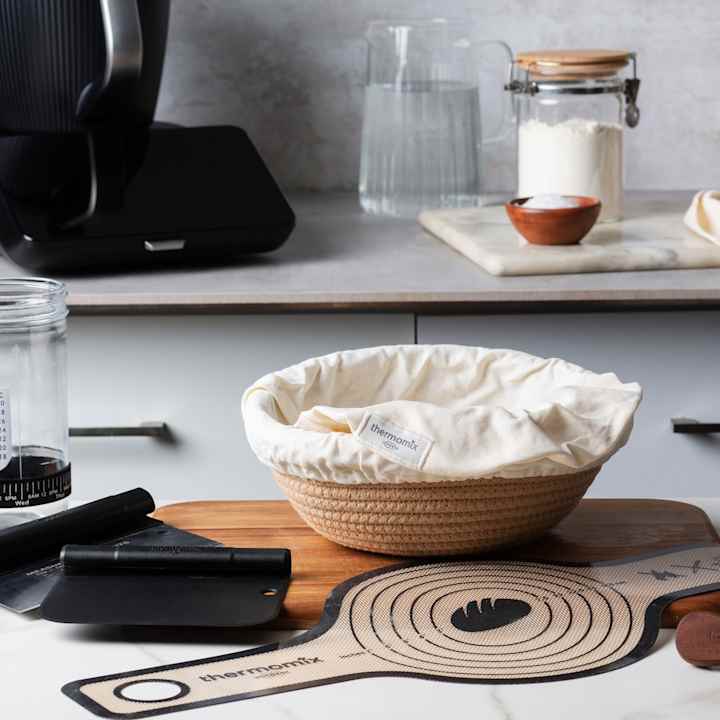
• Exact weights: The built-in scale helps keep feeding ratios accurate and consistent.
Set the lid gently on the jar and listen as the bubbles begin to settle. There’s a quiet kind of companionship here: a jar that breathes, a kitchen that waits, and bread that carries the flavor of grain, time, and care. We’ll feed it again soon enough, and you’ll see, this little one, known by many names, will begin filling your home with comfort long before the loaf ever reaches the oven.